
Public Events Programme
Subscribe to our Events Bulletin
Academic Year 2025-26
Diane Middlebrook and Carl Djerassi Visiting Professor: Lent term 2026
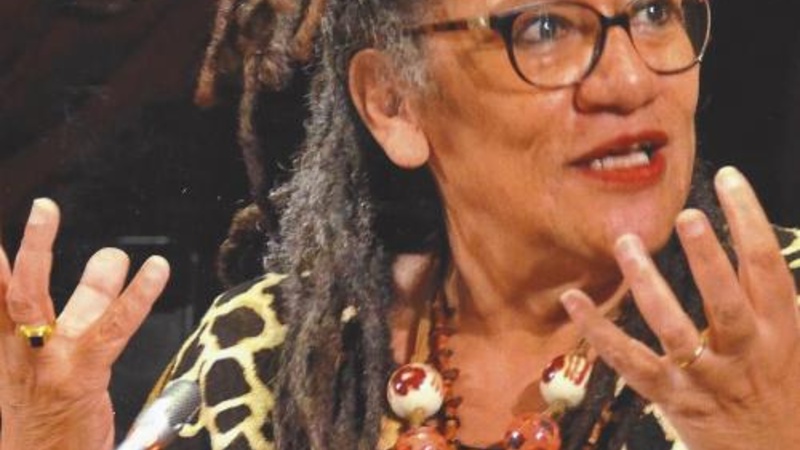
Professor Gloria Wekker
Professor Gloria Wekker, Professor Emerita in Gender Studies, Utrecht University is the Diane Middlebrook and Carl Djerassi Visiting Professor for the Lent term 2026.
Professor Wekker’s Visiting Professorship Lecture, ‘Still crazy after all those years; Revisiting Intersectionality ' was held in the Yusuf Hamied Theatre, Christ’s College, Cambridge on Wednesday 11 March. Our sincere thanks to Professor Wekker and all contributors for an inspiring lecture, which was followed by a Q&A and drinks reception.
Lecture abstract:
In my presentation, I will outline a critical picture of relevant (inter)national contexts in which the discipline of Gender Studies operates, in our current time. I will address two central issues. First, I will turn to the emergence in the past two decades of relatively new, bottom-up conceptualizations of gendered and sexual positionings, in conjunction with race. The development of these bottom-up terms has taken place against the backdrop of the so-called “anti-gender ideology”, global representatives of a patriarchal, white superiority-based order, which wants to undo everything that has been achieved by progressive movements, during decades of struggle.
Second, I will reflect on a Dutch “feminist classic”, entitled “Caleidoscopische Visies”/ Kaleidoscopic Visions (2001/ 2024), first published in 2001, under the editorship of two colleagues and me. (Jouwe, Botman and Wekker). Until recently, it was the first and only publication in the Dutch-language area dedicated to intersectionality. Which lessons can be learned from the history of the book, from its publication and reception in 2001 to its latest incarnation in 2024? What, ultimately, does it tell us about power relations within the discipline of Gender Studies in The Netherlands?
In Conversation: Should legal sex/gender be abolished?
Utopianism, failure, and the challenge of designing contentious law
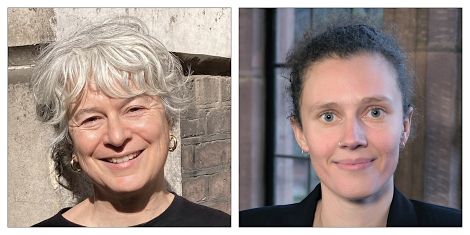
The Centre hosted an 'In conversation' with Professor Davina Cooper(King's College London) and Dr Lena Holzer(University of Cambridge) at the Alison Richard Building on Thursday 27 November 2025to discussShould legal sex/gender be abolished?
Professor Davina Cooper is a research professor in law and political theory at The Dickson Poon School of Law, King’s College London and the principal investigator of the research project 'Future of legal gender: a critical reform project'. One of the leading voices on prefigurative approaches to law, Cooper's scholarship has challenged top-down perspectives on law reform and, instead, encouraged grassroots, imaginative, and radical rethinkings of law and lawmaking. Dr Lena Holzer is Assistant Professor on Race, Gender and the Law at the University of Cambridge. Her scholarship has examined how legal gender has been constructed in human rights law and international sports law through a historical and comparative law approach, uncovering the distinct colonial, racial, and heteronormative assemblages that underpin these constructions.
The event was followed by a drinks reception in The Atrium, Alison Richard Building.
The Juliet Mitchell Lecture: Professor Lila Abu-Lughod
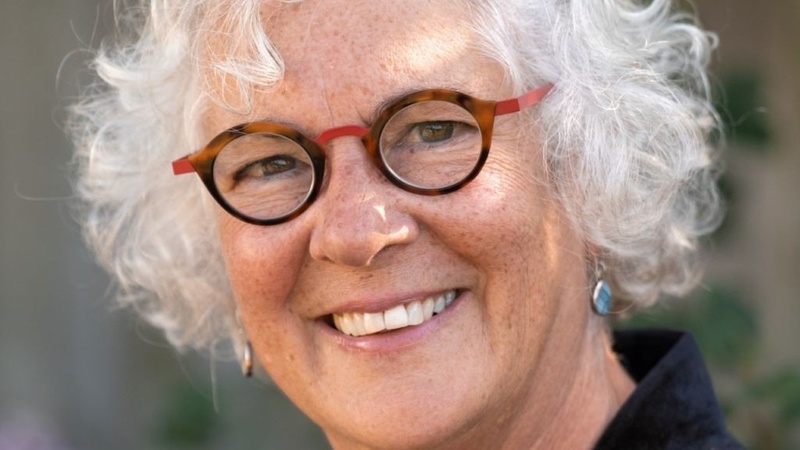
Professor Lila Abu-Lughod, Columbia University, gave the 'Juliet Mitchell Lecture' on Revisiting the Awkward Relationship of Feminism and Anthropology at the McCrum Lecture Theatre, Corpus Christi College, Cambridge on Wednesday 15 October 2025. The event attracted huge interest and we were delighted to have a capacity audience for the lecture, which was followed by a Q&A and drinks reception. We extend our sincere thanks to Professor Abu-Lughod and all contributors.
The JWC Mitchell Lectureseries was generously funded by The Staples Trust to honour Professor Juliet Mitchell's outstanding lifetime achievements in the field of Gender Studies.
Recording of lecture available here.
Academic Year 2024-25
From the Centre to the Margins: Decolonial Intersectionality: Professor Mara Viveros Vigoya
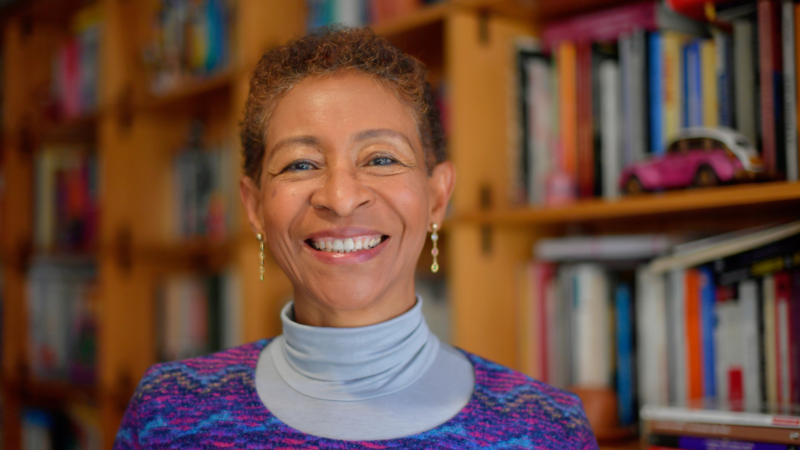
The Centre for Gender Studies co-hosted a public talk with the Centre for Latin American Studies on Wednesday 7 May 2025 with Professor Mara Viveros Vigoya, Simón Bolívar Professor 2025; School of Gender Studies, Universidad Nacional de Columbia. Professor Viveros Vigoya's lecture on From the Centre to the Margins: Decolonial Intersectionalitywas followed by a drinks reception. Our sincere thanks to Professor Viveros Vigoya and all contributors.
Book Launch for 'After the Exodus: Gender and Belonging in Bangladesh's Rohingya Refugee Camps':
Dr Farhana Afrin Rahman
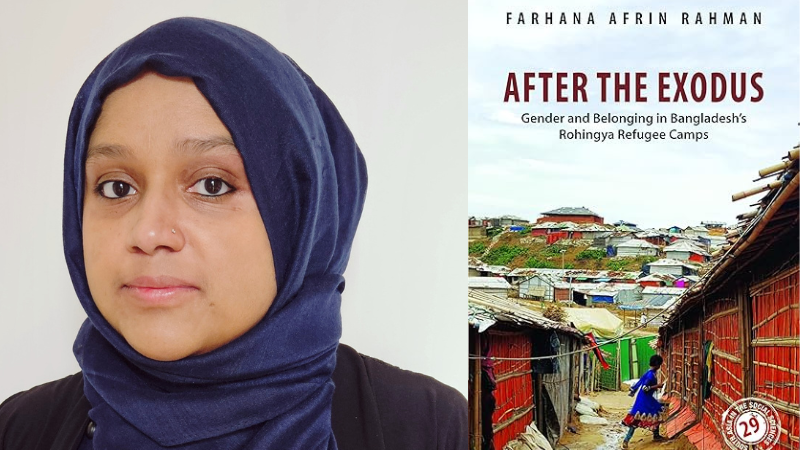
The Centre for Gender Studies was delighted to mark the launch of Dr Farhana Afrin Rahman's book After the Exodus: Gender and Belonging in Bangladesh’s Rohingya Refugee Camps (Cambridge University Press, 2024) on Wednesday 30 April 2025.
Dr Rahman's book examines how forced migration of the Rohingya from Myanmar to Bangladesh has affected the gendered subjectivities and lived experiences of Rohingya refugee women, and transformed gender relations and roles in displacement. Based on 14 months of feminist ethnographic fieldwork in Bangladesh’s Kutupalong-Balukhali refugee camp in 2017 and 2018, the book uncovers the everyday strategies employed by refugee women to create a sense of belonging and to make a life for themselves after forced migration. Rohingya women adapt to camp life by negotiating marriage and intimate experiences, adjusting to changing gender divisions of labour, and navigating encounters with humanitarian aid agencies and male camp leaders. These women strategically bargain shifting power relations to reconstruct their lives in displacement, thereby reclaiming agency and asserting their identity through the spaces they create, inhabit, and reshape; the coping mechanisms they employ; and the bonds of kinship and community they forge.
The event was followed by a drinks reception.
Cover image © Cambridge University Press. Used by Permission
Panel: '(Non-)Defining 'Gender' in the Crimes Against Humanity Draft: Possibilities, Alliances, and Strategies'
On Monday 3 February 2025, the Lauterpacht Centre for International Law (LCIL), with the support of the University of Cambridge Centre for Gender Studies, hosted a panel on (Non-)Defining 'Gender' in the Crimes Against Humanity Draft: Possibilities, Alliances, and Strategies. The roundtable event brought together scholars and activists working on the definition of gender in international criminal law, in an effort to learn from their specific positionalities, perceptions, and experiences about the challenges, strategies, and possibilities for (non-) defining the term.
Feminist activists, country representatives, and other civil society actors have debated how to define “gender” in international criminal law (ICL) for at least three decades. In the Rome Conference that established the International Criminal Court (ICC) and its Statute in 1998, defining “gender” was a hotly debated topic of negotiation. More recently, this debate has resurfaced in the steps leading to the International Law Commission’s Draft Articles for a Crimes Against Humanity Treaty, and continues to be discussed in the deliberations at the Sixth Committee on the Draft Articles. The CAH Convention is now expected to be negotiated between 2026-2029, and, more than a mere point of contention, the concept of ‘gender’ in its text can be crucial for prosecuting sexual and gender-based international crimes and thus fundamental to gender justice efforts worldwide.
Speakers:
Akila Radhakrishnan (Atlantic Council)
Alexandra Lily Kather (Emergent Justice Collective)
Dr Rosemary Grey (Sydney Law School)
Professor Valerie Oosterveld (Faculty of Law, Western University)
Moderators:
Dr Juliana Santos de Carvalho (LCIL Fellow and INT ACDF Fellow, University of Cambridge Centre for Gender Studies)
Dr Lena Holzer (LCIL Fellow and Assistant Professor in Gender, Race and the Law in the Law Faculty, University of Cambridge)